
Mileage records
Track work miles, review trips, and keep records inspectable before export.
1099 mileage guide
Many rideshare, delivery, and shopper drivers need mileage records for 1099 work and app-based income. This hub explains how gig workers can organize mileage, expenses, earnings, planning estimates, and exports while keeping tax decisions separate from recordkeeping.
Last reviewed: June 15, 2026
Track work miles, review trips, and keep records inspectable before export.
Mileage, trip, expense, earnings, and tax-planning records are designed to stay on your phone.
Export records only when you choose.
Inside GigClaim
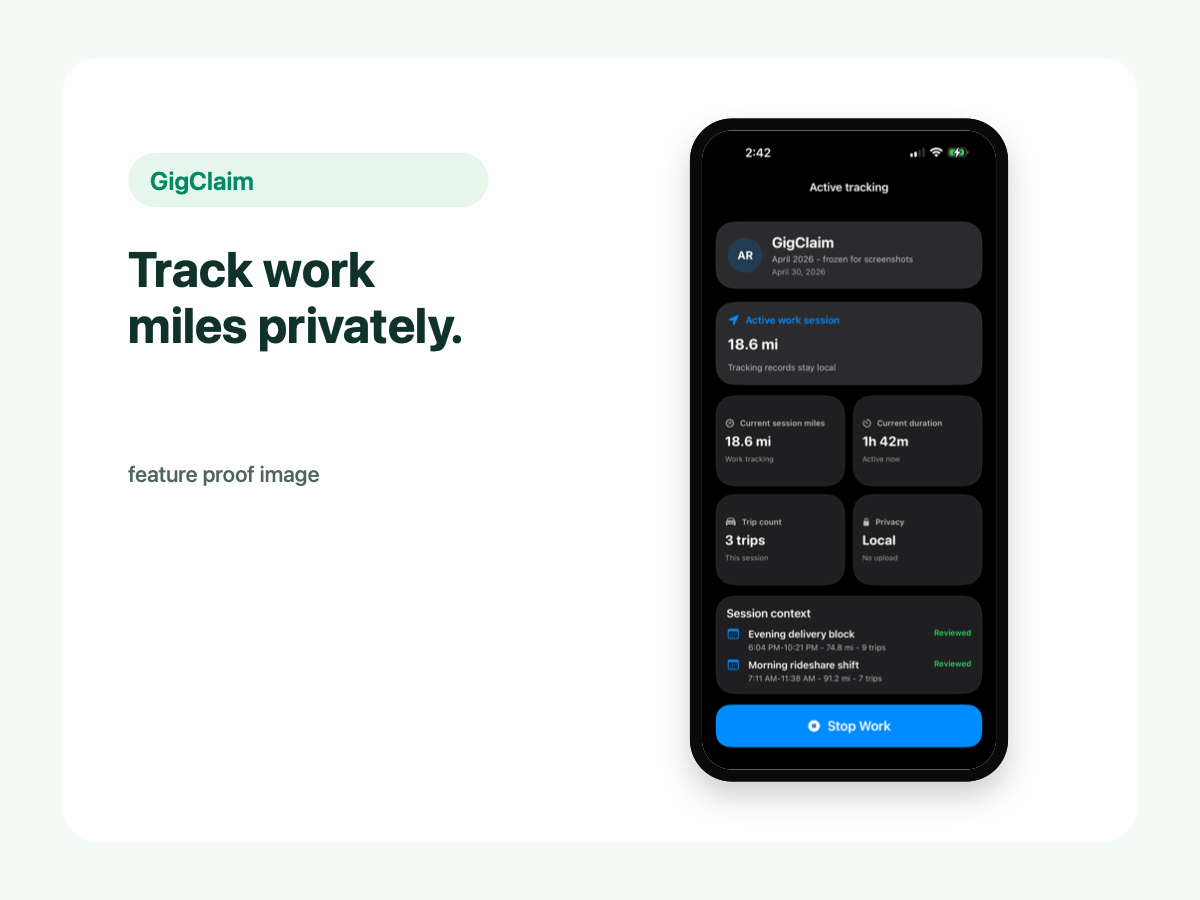
GigClaim is built around reviewable records: track the work session, inspect trips, add missed entries or notes when needed, then export only after the record makes sense.
That workflow is useful for busy delivery and rideshare days where personal errands, weak GPS, parking, tolls, or route changes can make a raw mileage total hard to trust without review.
Quick answer
Driver scenarios
Use these examples as review prompts, not tax conclusions. Your facts still matter.
If you drive rideshare, delivery, and shopping apps in one day, notes can help explain why trips belong in the same work session.
A gap between rides or orders may need review. Keep uncertainty visible instead of forcing the record into a final category.
Mileage makes more sense when you can compare it with earnings and costs from the same week.
Weekly workflow
The best time to fix a mileage record is before the details fade. A weekly review can help drivers check work sessions, classifications, missed trips, and notes.
GigClaim is designed around that workflow: track locally, review privately, and export when you choose.
Platform guides
Different gig apps create different mileage questions. Delivery drivers, shoppers, and multi-app workers can use platform-specific guides to think through pickups, drop-offs, store trips, waits, and review-needed records.
These guides do not decide tax treatment. They help drivers build cleaner records to review themselves or with a qualified tax professional.
Records
Mileage records are easier to understand when you can compare them with earnings and expenses from the same period.
GigClaim helps drivers keep those records in one local-first workflow.
Privacy
Driver records can reveal where you drive, when you work, what platforms you use, and how much you earn.
GigClaim is designed so mileage, trip, expense, earnings, and tax-planning records stay on your phone. Website forms, support requests, App Store subscriptions, and analytics may be handled separately.
Review checklist
Review work sessions, first and last trips, classifications, missed trips, and notes.
Check expenses and earnings you chose to log for the same period as the mileage export.
Export only when you choose and protect the file after it leaves your phone.
Common mistakes
Mileage is important, but expenses, earnings, notes, and review status can help explain the record.
Captured trips should still be reviewed as work, commute, personal, or review-needed.
GigClaim provides planning estimates and recordkeeping tools. It does not file taxes or provide tax advice.
Exports can contain private driver records. Share only with trusted recipients.
Boundaries
FAQ
Useful records can include work-session dates, trip distances, classifications, notes, missed-trip entries, and exports created after review.
No. GigClaim helps organize driver records and planning estimates. It does not file taxes.
GigClaim is built for U.S. rideshare and delivery drivers, including multi-app workflows. Drivers should review records before relying on them.